Research Article - (2025) Volume 15, Issue 3
Learning Resource Centre: Central Library
Bezwada Ravi Kumar*Abstract
Welcome to St, Ann’s College of Engineering and Technology Library. This Library was started along with the establishment of the ST, Ann’s College of Engineering and Technology in 2000 in order to cater to the academic and research needs of the faculty and students. Since then, the Library has gone from strength to strength to live-up to the expectations of its immediate clientele. Library automation refers to mechanization of library housekeeping operations predominantly by computerization. To develop and updated database of books and other resources of the Engineering College Library, St, Ann’s college of Engineering and Technology, Chirala, JNTU, Kakinada University. To implement automated system using smart campus integrated open source software the engineering college main library is on West side, Nayunepalli, Vetapalem, Chirala.
Keywords
Main library, Aim and objectives of the study, Library rules, Section of the library, Library automation, INFLIBNET/IUC facilities
Introduction
Main library: The St, Ann’s College of Engineering and Technology Library did not have its own building until 2000. The building was designed to have three floors with a total floor area of 922.33 sqm and to provide stacking capacity 50000 volumes approximately, and accommodate 160 readers in general.
Campus library: The St, Ann’s College of Engineering and Technology, a branch of the Departments Library. Library is a fast growing organism. The ancient methods of maintaining it are no longer dynamic and efficient. For expeditious retrieval and dissemination of information and better service for the clientele, application of modern techniques has become absolutely indispensable. A properly computerized library will help its users with quick and prompt services. Library automation refers to mechanization of library housekeeping operations predominantly by computerization. The most commonly known housekeeping operations are acquisition control, serials control, cataloguing, and classification and circulation control. Library automation or Integrated Library system (ILS) is an enterprise resource planning systems for a library, used to tracks items owned, order made, bills paid etc. Plethora’s of delimitations are found in library literature. Sometimes the terms ‘mechanization and automation’ looked overlapped, although there is a different of one degree between the two. Automation is the name gives to an automation system of working. A large number of volumes and the manuscript section of St, Ann’s College of Engineering and Technology library were transferred to this campus library. Besides this there are various departmental libraries and the main library procures books for both the campus and departmental libraries (Figure 1).
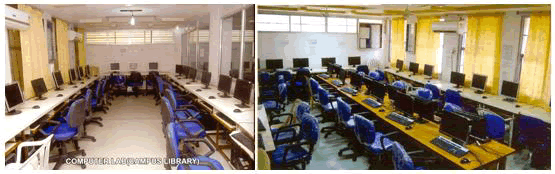 Figure-1: Image of the library.
Literature Review
Library committee: Under Section 75 (i) of the St, Ann’s College of Engineering and Technology Act, 2008 a library committee has been constituted for administering, organizing and maintaining the college library and its services. Present library committee consists of the following members. The committee meets at certain interval based on the requirement and decision by the committee members. In its meeting, the committee decides matter related to modernization and improvement of library and documentation services, membership and library fees, annual budget and annual report of the library [1]. Besides this, for the smooth functioning of the library, the committee advices on formation of policies, rules and regulations and implementation of the same in a judicious manner.
Aim and objectives of the study: The following are the objectives of this study:
• To develop and updated database of books and other resources of the engineering collegelibrary, St, Ann’s College of Engineering and Technology, Chirala.
• To implement automated system using smart campus library integrated open sourcesoftware.
• To carry bout, the charging and discharging functions of the circulation section moreeffectively.
• To provide various search options to know the availability of books in the library.
• To generate the list of books due by a particular member and also the overdue charges.
Plan of action
• Visited and observed of the engineering college library.
• Taking the stock of the situation.
• Physical exam of the books.
• Bibliographic data has been collated and entered in Excel sheet.
• Classification humanities for all the books general devised and assessment visited DeweyDecimal Classification (DDC) 21st edition.
Membership
The membership of the library is open for the college authorities; officers; heads and teachers of the departments; non-teaching employees of the college; students and research scholars of the Engineering Departments; postgraduate students of the affiliated colleges; and others engaged in serious reading and research. The institutional membership is also created. The details of membership are as under.
For information about annual subscription and for other details members can contact the registration section at the main library. The duration of membership other than category ’L’ i.e., short term users shall be for one academic year and shall have to be renewed every year. Any change in address during the validity period of membership should be communicated in writing to the librarian. The registration section remains open from 11.00 a.m. to 5.00 p.m. (on all working days till the end of December each year).
Borrowing privileges
All categories of members excepting the reading room users, and short term users are entitled to borrow books as per the prevailing rules of the library. Borrowers hold responsibility for the books (s)issued to them. Users have to pay for the lost or damaged books; and over-due charge for thelate return of the books (s); duplicate identity cards; etc. at a rate determined by the librarycommittee. Other than books prescribed for the university examination (text books) all othermaterials like theses and dissertations; reference books; books marked as ‘Rare’ or ‘Reserved’periodicals bound volumes; Maps; A-V materials are not issued for use outside the library.
Discussion
Library rules
Reading room:
• Any person desiring to make use of reading room facility may be admitted at the discretionof the librarian.
• The reading room card shall be produced for scrutiny at the time when so requested by thelibrary staff.
• Each member belonging to the category G and H shall have to produce universitydepartment/college identity card on demand for verification.
• Books and journals requisitioned by the members shall be issued on presentation of arequisition slip duly filled in and handed over to the person in-charge, who shall thereafterprocure the same for the member.
• A person found mutilating the pages of any book or periodical or otherwise damaging themshall have to be penalized for the damage as decided by the concerned library authorityand he/she shall be debarred from the use of the library.in.future.
Late fee: A member who fails to return the book/books issued beyond a date on which it is returnable, shall be required to pay a late fee of Rupee 1/- per day per book.
Damage of loss of books:
• Every member taking a book out of the library and every reader within the library shall beresponsible for its safe custody and shall return it to the library.
• In the case of book being lost or damaged he/she shall to replace the book. In case of outof print books he/she shall be required to pay not less than 3 times cost of the books.
• Reader shall not write on the book, damage, tear off pages or make any mark either withpencil or in ink, on any book, manuscript, or map belonging to the library. He/she shall noterase any mark or stamp of the library on any book, manuscript or map belonging to the library. Any reader observing such thing done by any person shall bring it to the notice of the Librarian immediately.
• No tracing and no copy of any map or manuscript shall be done without express permission of the librarian.
• In case of a book belonging to a set or series is loss of damage by a member/reader and anew volume is not separately available, the whole set or series shall have to be replaced bythe borrower/reader.
• Before leaving the counter the borrower should immediately point out any mutilations inthe book to library assistant on duty or otherwise the borrower shall be held responsiblefor replacement of the book or payment of such compensation as may be fixed by thelibrarian.
It shall be the duty of the library assistant on duly at the counter to examine each book returned by a member and to check if it is mutilated or damaged and if any, bring it to the notice of the librarian immediately.
Penal rules: Unauthorized removal of books, mutilation, theft, damage, misbehavior with library staff, and abuse of the facilities warrants penal action against such members by the library committee [2]. Pending decision of the library committee, the librarian may take one or more of the following actions:
• Cancellation of membership.
• Forfeiting library deposit.
• Recovery of the cost of damage etc.
Library staffs have the right to ask users for evidence of membership. The librarian may at any time recall any book before expiry of the period of loan and regulate the issue of any book.
General rules
• Student must wear the ID cards when entering the library.
• Absolute silence should be maintained by all in the library.
• Using of cell phones inside the library is strictly prohibited.
• A borrowed book may be returned for a period not exceeding 14 days: Book may bereturned on request if there is no reservation and at the discretion of the librarian.
• The book shall be returned on or before the due date. A fine of 1/- will be collected. If thebook is returned after the due date till one month.
• A special fine Rs.50/- will be collected, if the book is returned after one month of the duedate not exceeding another month. There after the book is presumed to be lost. In suchcases the student has to pay immediately double cost of the book.
• The borrower should point out if there is any damage in the book at the time of borrowingthe book.
• Folding of the corners of the pages of book marking or writing therein with ink or penciltearing or taking out pages or otherwise damaging it will constitute damage of the book.Any such damage of a book is serious offence. She/he will have to replace the book andpay binding charges of 25/.
• A person entering the library shall record his/her name, membership number and addressin the register maintained for the purpose at the entrance counter.
• While entering the library, all personal belongings such as umbrellas, sticks, books,parcels, hat, handbags, purses, briefcases, flat and file covers, etc. shall be deposited withthe attendant at the entrance counter and a numbered taken obtained in lieu thereof. Thisfacility for depositing personal belonging at the check counter can be enjoyed only for theperiod the depositor is in the library.
• The staff member of the library at the entrance is authorized to examine everything thatpasses into or out of the library.
• Talking, chewing pan, spitting, eating food, sleeping, smoking or any behavior whichwould disturb other readers or the discipline of the library is strictly prohibited.
• The Librarian shall have the power to suspend the use of the ticket and card of any memberor to refuse admission to any one, infringing any rules of the library and/or to suspend orcancel the use of the borrows ticket and reading room card of any member [3].
Note: The members are requested to note that all library rules could not mentioned here, because, it has already been displayed on the notice board. If any member requires the information of the library rule, he/she may contact to in charge, lending section of main library, Chirala.
Library timing
Main library:
• Office hours: 08.00 a.m. to 08.00 p.m. (on all working days)
• Library hours: 9.00 a.m. to 01.00 p.m. (on all days excluding holidays)
• Extended hours: 09.00 a.m. to 01.00 p.m. (one month prior to commencement ofuniversity examinations till last post graduate examination) (all days including Sunday andholidays)
Campus library
• Office hours: 08.00 a.m. to 08.00 p.m. (Monday to Friday): 09.00 a.m. to 2.00 p.m. (EverySaturday)
• Extended hours: 5.30 p.m. to 08.00 p.m. (one month prior to commencement of universityexaminations till last post graduate examination) (all days excluding Sunday and holidays)
• Loan counter: The loan counter will function on working days only as under.
• Main library: The loan counter will be open from 10.00 a.m. to 5.00 p.m. on all workingdays.
• Campus library: The loan counter will be open from 10.00 a.m. to 1.00 p.m. and 1.30p.m. to 4.00 p.m. (Monday to Friday). 10.00 a.m. to 1.00 p.m. (every Saturday).
Section of the library: Librarian’s office, server room, acquisition, processing, internet and opac, lending, theses, rare books, maps, reading room, newspapers, career literature, registration of borrowers, fee counter and photocopying.
Campus library: Server room, internet and OPAC, lending, reading room, reference, Periodical, manuscripts, newspapers and general magazines, photocopying and AV material.
Library automation: The college library started automation in 2009. The housekeeping activities computerized are: (a) Acquisition of books and other documents; (b) Cataloguing; (c) Journals management including bound volumes; (d) Circulation of documents; (e) Data conversion. The computerized services are as under: (a) OPAC (Online Public Access Catalogue); (b) Current awareness services; (c) Online databases; (d) Internet/E-mail.
E-Resources
The DELNET is existing in the Physics Department. Hence, all DELNET services under the control of coordinator Librarian. Those research scholars who are interested to know regarding the number of the e-resources (Journals) are freely access through DELNET, they may obtain the information under website: www.delnet.nic.in
INFLIBNET/IUC facilities
Since incept the university has been very activity participating in the various programmers/services of INFLIBNET initiated from time to time. These are as under:
• Contributing our computerized books database and current serials data to the unioncatalogue build by INFLIBNET Centre every year.
• Contributing data to expert’s database built by INFLIBNET Centre.
• Active participation in the various training programmers conducted at INFLIBNET centreand also at the college.
• Encouraging our library users to access INFLIBNET website and their various onlinedatabases.
The engineering college library following books has been entered in smart campus software (Tables 1 and 2).
| Branch/Courses | Titles | Volumes |
| Engineering and Technology | 7805 | 33844 |
| MCA | 562 | 5130 |
| MBA | 554 | 5097 |
| Total | 8411 | 44071 |
Table 1: Total number of books in the library.
| Branch/Courses | International | National |
| Engineering and Technology | 49 | 89 |
| MCA | 6 | 12 |
| MBA | 12 | 12 |
| Total | 67 | 113 |
Table 2: Total number of journals
Useful internet links
• Free online journals: www.doaj.org
• Open access journals: http://www.openj-gate.com
• Free full-text journals on-line: http://www.freefulltext.com
• Online course materials from IIT: http://nptel.iitm.ac.in
• Catalogue of world libraries: http://www.libdex.com
• Innovative internet applications in libraries: http://www.wiltonlibrary.org/Innovate.html
• Open source books: http://www.gutenberg.org
• Public library of science: www.plos.org/journals/index.html
• The engineering libraries division http://eld.lib.ucdavis.edu of the American society forengineering education http://www.asee.org has recently created a blog on the scholarlycommunication in engineering.
• An international directory of publishers and vendors used by libraries
• http://acqweb.library.vanderbilt.edu/pubr.html
• To access newspapers and magazines: http://www.world-newspapers.com/ http://www.onlinenewspapers.com>
• Librarian internet index: http://iii.org
• Web portal for engineering students: www.btechguru.com.
Services of the library
The college library is providing following types of services its registered members:
• Registration of members.
• Issues and return.
• ILL (Inter Library Loan) (Only to university teachers and research students).
• Access to current issues and back volumes of periodicals.
• Access to manuscripts and rare books
• Reference and information service
• Access to audio-video material
• Reading room facility
• Bibliographical service
• OPAC (Online Public Access Catalogue)
• Web OPAC (Web based Online Public Access Catalogue)
• CD-ROM database service (Online/Offline)
• Internet and e-mail services
• Exhibition of new arrival of books and journals
• Daily newspapers and its clipping services
• Photocopying
• Library orientation to users
Online Public Access Catalogue (OPAC)
• Along with the traditional card catalogue a computerized on line Public Access Catalogue(OPAC) of the main and campus library is operational work on converting the catalogueof the collections of departmental libraries is in progress.
• The OPAC allows search by author, title, subject and title, keywords as well as throughseveral other access points.
• Web OPAC-the OPAC can also be searched through the university Website www.nagpuruniversity.org by clicking on the link “Central Library”.
E-mail and Fax
E-mail facility is available both at the main and campus library. Panasonic-plain paper fax hasbeen installed at the Main Library for providing the facility to users.
Inter library loan facilities
• Books and other publications which are not available in the library may be procured by thelibrarian on loan from other libraries or Institutions for the benefit of the members of thelibrary. The packing and postal charges for getting such publications on loan and returnthem to the respective libraries shall be borne by the member concerned. When the bookis returned by post it shall be returned under registered cover at the risk of the borrowerand he/she shall be responsible for any damage to the book cause during transit. Provided,that in case of research scholars and teachers working in the department of the college, thepostal charges incurred in getting and returning the book/books on inter-library-loanfacility be borne by the college library, if the guide or the head of the department concernedas the case may be certifies the same.
• All such book/books received on inter/-library-loan basis shall be read in the reading roomand shall not be issued for use outside the library.
Reservation of books
A book which is lend out to a member may be reserved for borrowing by another member by filling of a self-addressed stamped reservation card at the counter. The card shall be dispatch to said member when the book is received. Such a book shall be kept reserved for him her for a period of 3 days only and shall be issued strictly according to priority of demand to the members.
Career literature
Other information:
Catalogue: Dictionary (in an alphabetical sequence)
Classification Scheme: Dewey Decimal
OPAC Database UGC-INFONET Digital Library Consortium
Central library home
Library and information center: Students should possess at least one text book for each subject of their study. It may be noted that library is not a provider of text books to students for their routine studies. Library is a reservoir of various sources of information and knowledge and students should utilize library as a source of additional information. They should cultivate the habit of studying in the library during library hours instead of leaving the college soon after the class work is over [4]. All eligible SC/ST students should make use of the SC/ST book bank for their text books.
Overview: The library provides learning materials through CDs, national and international journals and has video conferencing and discussion rooms facilities (Table 3).
| Library timings | 8.00 a.m. to 8.00 p.m. |
| Holidays timings | 8.00 a.m. to 6.00 p.m. |
| Located in | 922.33 Sqm. area |
| Seating capacity | 250 |
| Titles | 8450 |
| Total no. of books | 44071 |
| Reference books | 8450 |
| e-Books | 2,200 |
| e-Journals | 4,329 |
| Book bank for SC/ST | 300 |
| Back volumes | 1,494 |
| Project reports | 2000 |
Table 3: Overview of the library.
Internet facility/digital library
Library avails the 10 MBps internet connectivity for BSNL leased line. The library subscribes to AICTE mandatory e-journals like IEEE, ASME, ASCE, J-GATE management, McGraw-Hill and ASTM digital library. The library subscribes to 128 technical print journals and magazines, out of which 100 are Indian and 12 international. The library also subscribes to quite a number of high value international, Asian and Indian general magazines [5].
Digital library: The library has 30 dedicated computers with multimedia and internet facility.
Media resource centre
• Photocopying (Xerox 2 Nos.)
• Xerox cum network printer (Toshiba E-studio 160 Digital Printer)
• DVD writer
• VHS cassette to VCD conversion
• Video camera
• Scanner
All the data relating to the library is computerized and bar coding has been introduced.
Rules and regulations
Library server specifications:
• Library has a media server with NPTEL specifications.
• Xeon dual core processor support 2.33 GHz.
• 16 GB of RAM can be scalable to 64 GB.
• 6 TB of SAN storage can be scalable to 12 TB.
• Hardware RAID.
• Gigabit network connectivity.
Server has connected more than 100 systems of various departments.
The Library is member of DELNET and provides web access to 1, 21, 08,793 records of Books, Periodicals, Theses, Dissertations with locational data and document delivery facility at the national level to the students and faculty. It is connected to 2196 Libraries in 32 States in India and Seven Other countries.
Other resources
Digital learning materials:
• 10000 hours of NPTEL video lectures by IIT teachers on 300 subjects.
• 129 NPTEL web based courses by IIT’s.
• 500 hours of CD/video courses on 25 engineering subjects by SONET.
• 224 hours of video lectures on industrial grade skills from IEG.
• 200 hours of INDO-US lectures.
• CBTs (Computer Based Tutorials) on 42 subjects.
• Online tutorials for all engineering programme from JNTUK-COEERD.
Conclusion
The Learning Resource Centre, often represented by the Central Library, plays a vital role in supporting academic growth and intellectual development. It serves as a hub of knowledge, offering access to diverse resources, including books, digital materials, and research tools. By providing a quiet and resourceful environment, it encourages independent learning, critical thinking, and collaboration among students and faculty. The Centre continuously adapts to modern educational needs through technology integration and updated collections. Overall, the Central Library stands as an essential pillar of education, fostering curiosity, innovation, and lifelong learning in an ever-evolving academic landscape.
References
- Edwards B. "Libraries and learning resource centres." (2009). Routledge.
- Williams, D., and Wavell, C. "Evaluating the impact of the school library resource center on learning." School Libraries Worldwide 7.1 (2001): 58.
- Williams, D,, and Wavell, C. "Learning and the school library resource centre". In IASL Annual Conference Proceedings (2021): 77-90.
- Astbury, R. "The public library of the twenty first century: The key information and learning centre in the community?." Libri 44.2 (1994): 130.
- Premkumar, K., and Baumber, J. S. "A learning resources centre: its utilization by medical students." Med Educ 30.6 (1996): 405-411.
[Crossref] [Google Scholar] [PubMed]
- Ellison, W. "Designing the learning spaces of a university library." New Library World 117.5-6 (2016): 294-307.
Author Info
Bezwada Ravi Kumar*Received: 21-Nov-2024, Manuscript No. IJLIS-25-153016; Editor assigned: 24-Nov-2025, Pre QC No. IJLIS-25-153016 (PQ); Reviewed: 10-Dec-2025, QC No. IJLIS-25-153016; Revised: 15-Sep-2025, Manuscript No. IJLIS-25-153016 (R); Published: 22-Sep-2025, DOI: 10.35248/2231-4911.25.14.863
Copyright: This is an open access article distributed under the terms of the Creative Commons Attribution License, which permits unrestricted use, distribution, and reproduction in any medium, provided the original work is properly cited.
Call for Papers
Authors can contribute papers on
What is Your ORCID
Register for the persistent digital identifier that distinguishes you from every other researcher.
Social Bookmarking
Know Your Citation Style
American Psychological Association (APA)
Modern Language Association (MLA)
American Anthropological Association (AAA)
Society for American Archaeology
American Antiquity Citation Style
American Medical Association (AMA)
American Political Science Association(APSA)
Google Scholar citation report
Citations : 1680
International Journal of Library and Information Studies peer review process verified at publons
Indexed In
Bibliography & Citation Tools