

Research Article - (2025) Volume 15, Issue 2
Electronic Resources in Selected Engineering College Libraries of Jammu Division: A Users Study
Asha Rani1* and Meghna Dhar2Abstract
Engineering, a software of scientific, economic, social, and sensible understanding that designs, builds, continues systems, machines, devices, systems, materials and strategies, that plays a key function in socio-financial improvement of any kingdom. They discover the answers for sensible troubles of the society. First rate engineering colleges are important to put together engineers with suitable know how and abilties in engineering. The library is a completely important source of records and information of any academic organization. except those libraries have enough assets such as finance, building, furniture and so forth., they'll not be able to provide necessary offerings to their customers. The prevailing paper highlights the want and significance of diverse electronic sources in decided on engineering college libraries beneath observe. The principle objectives of the existing look at are to discover the prevailing e-sources and to take a look at the notice degree and use of e-assets by using the users. It further states the satisfaction degree of users toward e-resources and unearths out user’s preference in the use of print and e-assets and cause in their choices. The survey technique changed into used to accumulate the needful information for the analysis for which questionnaire was framed and had been allotted a few of the users. Approximately 570 questionnaires have been received again duly filled. The take a look at protected the students and college contributors using the library for browsing both print and e-collections and borrowing books as in step with their need. From the study it become clean that students and school participants provide preferences on e- resources than revealed cloth. In present day scenario electronic sources have become a vital part of the engineering libraries and for the academic vision specially the higher educational outlook.
Keywords
E-resources, Information sources, Satisfaction level, Awareness level, Print resources
Introduction
Engineering education is vital and essential input for national technical development and for strengthening the industry, economy and ultimately improving the eminence of life of the people [1]. Engineering and technical education all over the world is gaining importance day by day because of rapid advancements in science and technology and innovations in various disciplines due constant and continuous research in each and every field [2]. In the developing countries especially in India, the knowledge of advancement in technology is one of the basic requirements for any development activities [3]. The demand for technically qualified personnel is rapidly gaining momentum in various fields of technology [4]. It is skillful, artful and constructive education that rises to application minded mankind who are essential for the socio-economic development of any country [5]. The engineering college libraries are the store house of information resources and services [6]. The main aim of the engineering libraries is to satisfy the user community by providing the relevant and appropriate services as and when they are in need [7]. E-resources are back bone of present society and it is very important for user’s point view as well as library researches want quick information and it is possible through only electronic resources [8]. With the rapid development of electronic publishing, libraries are not only acquiring reading materials such as printed books and journals but also providing access to various resources in electronic form [9].
Materials and Methods
An assessment of literature helps up-to-date discover the hooked up findings on the selected research problem [10]. There are range of studies posted up to date associated with diverse up to date of library assets and offerings in engineering institutes [11]. A number of such research which are reviewed and up-to-date be stated are as below:
Parashar and Praveen in their take a look at observed that many up-to-date make use of electronic sources and there was a small institution of up to date updated who does no longer use them up to date a group of up-to-date that use each electronic and print sources [12].
Muzamil and Ariba of their take a look at located that those faculties were up to date more interested by focusing on building a sturdy e-resource series in their libraries. In the course of the past few years, the finances have also been increased in majority of libraries for the acquisition of e-assets. Further, the have a look at found that the most important up to date updated affecting the selection of e-resources in these schools had been up to date, concern coverage, license settlement and seller aid. It was additionally revealed that majority of libraries lack proper series development coverage, mainly for e-sources [13].
Bharathi and Sujatha of their paper investigated that the utilization and effectiveness of virtual libraries in 51 self-budget engineering colleges affiliated up-to-date the Visvesvaraya technological college within the country of Karnataka, India. most of the people 88.9% of users had been of the opinion that virtual library services were advanced up-to-date library services. It additionally found out that virtual library utilization and its reason had been correlated using Pearson correlation and its vast price r=0.489, p=0.000<0.01 proves that user dependency on digital statistics resources up-to-date positively increasing inside the respondents’ activities has an effect on their instructional pursuits [14].
Dhanalakshmi and Nalhe in them observe determined that 80% of the students are glad with flow provider. about 26.66% of the students spend extra than 7 hours inside the library. 38% of students expressed that their magnificence paintings impact the use of library whereas majority of them felt that class paintings do no longer have an impact on the usage of library services as they have enough unfastened time. It also revealed that 36.66 % college students utilize the library offerings daily. 45.33% of college students aren't satisfied with the organization of offerings and 20% of them expressed that the team of worker’s cooperation is terrible.
Kiran Kumar in them examine mentioned that the need for switch from conventional print resources updated digital resources and the college library can installation servers like Ezproxy within the library and gives library assets and offerings updated the door steps of it cusupupdated. It's far in addition stated that the Ezproxy set up will routinely enhance the use of electronic information resources shape off campus up-to-date mode.
Rathour and Rana in their take a look at mentioned the facts needs and data in search of behaviour of school participants in engineering colleges of Haryana. The result indicates that maximum of faculty use library collection and offerings however they're not acquainted with new library technologies. College requirements are affected up to date because of the everyday modifications in statistics technologies and modifications in programme. It's far in addition stated that the achievement operation of any library depends up to date a massive amount on the choice of library collection. The selection of the gathering must meet the want and requirements of the give upupdated up to date. It has been found out that essential cause updated the library collection and offerings is borrowing books. Similarly, up to date stream, reference provider up-to-date the second one fundamental service used by majority of the college. Firdaus and Haridasan of them observe revealed that for majority of PG engineering college students (92%), internet up-to-date located up to date be the principle source of facts approximately the internet resources. It is in addition stated that a majority of cusupupdated i.e., (86%) use web sources for the look at and mastering functions, 2nd highest percentage of the upto-date i.e., (72%) use them for maintaining up-to-date with current tendencies. The examine recommends that up-to-date ensure gifted and efficient use of net resources by way of engineering students, arms on education, workshops and orientation programs may be supplied up to date them.
Dhar in her observe analyzed that the majority of updated of GCET, Jammu that is 67 (56.77%) are satisfied with the stream service and 51 (43.22%) up to date aren't satisfied with the stream carrier of their university library. The respondents who have been not glad with the circulation carrier in their library experience that the traditional services need updated be replaced by automatic carrier up-to-date make the library offerings simpler and handy. It is similarly said that, user’s pleasure is the main up to date of the library offerings. It's far the responsibility of every library personnel updated make every pupil and faculty absolutely up-to-date new technology for efficient and powerful functioning of the library.
Reddy and Reddy of them observe investigated on the library series and services in 23 decided on engineering college libraries of Hyderabad and Rangareddy districts, Telangana. The primary findings of the have a look at found out that 79.8% of the up-to-date are happy with the collection of reference books, seventy 7.8% of up to date updated are happy with the collection of textbooks, 73.7% up to date updated are satisfied with the collection of journals and 72.7% upto-date are glad with the collection of well-known books. About 44.6% up to date are satisfied with the technical reviews, theses, dissertations collection, 29.6% are disappointed and the last 25.8% are neither satisfied nor disillusioned and 74.5% of the up-to-date are happy with the movement provider and 68.2% up to date are glad with net looking service. Observe additionally shows that 58.2% are satisfied with the library catalogue/OPAC provider and 54.8% are glad with the reservation of record service and about 49.9% of the users are happy with updated copying carrier, 29.8% are disillusioned and 20.3% are neither happy nor upset.
Puttaswamy and Krishnamurthy observed in their study that majority of senior level teachers and research scholars access the e-Resources for the research work rather than teaching. The study shows that, 94% of the users are depending on e-Resources which are more important for their study rather than print collection. The trend predicts that e-Resources has over taken the print resources and predict that the print collection will be phased out in near future.
Scope and limitations of the study
The study is limited to the students and faculty members of following five engineering college libraries of Jammu division:
• Indian Institute of Technology, Jammu.
• Government College of Engineering and Technology, Jammu.
• College of Engineering, Shri Mata Vaishno Devi University, Udhampur.
• College of Engineering and Technology, Baba Ghulam Shah Badshah University, Rajouri
• Model Institute of Engineering and Technology, Bantalab, Jammu.
Objectives of the study
The subsequent are the objectives of the have a look at:
• To find out the existing e-resources in engineering colleges libraries.
• To study the awareness and use of e-resources by the users Engineering College libraries.
• To know the satisfaction level of users towards e-resources.
• To find out user’s preference in the use of print and e-resources and the cause of the preference.
Results and Discussion
Research methodology
For the present study, questionnaire method was used as research tool to conduct the survey. Apart from this personal meetings and observations, discussions with the students and faculty members were conducted for this study. In addition, website of concerned engineering colleges was also accessed to gather related information. Two types of questionnaires were framed for users, one for students and faculty members and second for librarians of the library. A sample of 570 users was selected, which includes 500 students, 5 librarians by equal allocation method and 65 faculty members purposively. The data collected have been analyzed to reach conclusion.
Data analysis and interpretation
The Table 1 and Figure1 shows the College wise distribution of respondents. The maximum number of the respondents from the category of faculty members is 15 from CET, BGSBU and minimum numbers are 11 from GCET.
| Sr. no | Name of college/university | Students | Faculty members |
| 1 | IIT, Jammu | 100 | 12 |
| 2 | GCET, Jammu | 100 | 11 |
| 3 | CE, SMVDU, Udhampur | 100 | 13 |
| 4 | CET, BGSBU, Rajouri | 100 | 15 |
| 5 | MIET, Jammu | 100 | 14 |
| Total | 500 | 65 | |
Table 1: College/university wise distribution of respondents
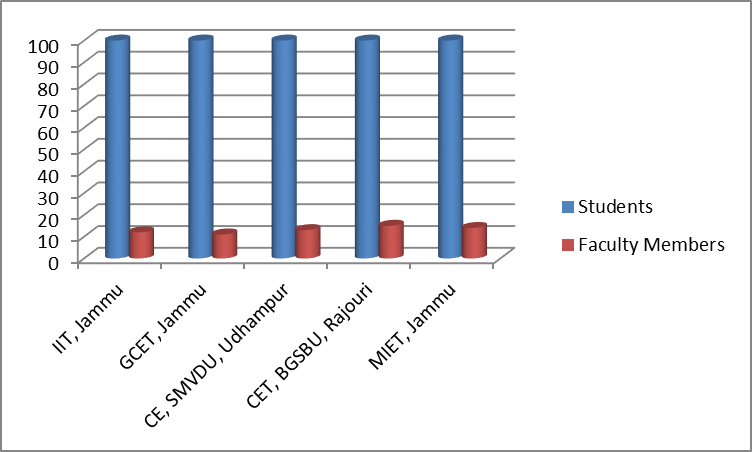
Figure-1: College-wise distribution of respondents.
Table 2 and Figure 2 indicates the year of establishment of college/ university. It was observed that the oldest college in Jammu division is GCET, which was established in 1993. After that MIET, Jammu was established in 1996, CE, SMVDU were established in 1999, followed CET, BGSBU, Rajouri that was established in 2002 and IIT, Jammu was established in the year 2016.
| S. no | Name | Year of establishment | Type |
| 1 | IIT, Jammu | 2016 | Government |
| 2 | GCET, Jammu | 1993 | Government |
| 3 | CE, SMVDU, Udhampur | 1999 | University-autonomous |
| 4 | CET, BGSBU, Rajouri | 2002 | University-autonomous |
| 5 | MIET, Jammu | 1996 | Private-autonomous |
Table 2: Year of establishment of engineering colleges
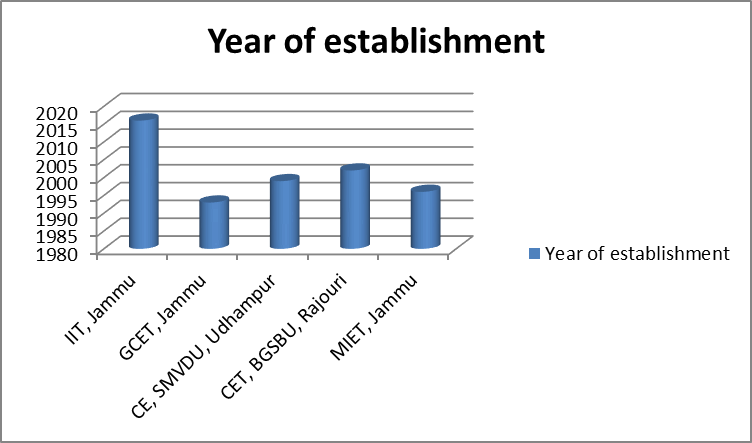
Figure-2: Year of establishment of engineering colleges.
Table 3 and Figure 3 indicates various types of electronic collections available in Engineering College Libraries under study. It was observed that the highest number of library e-Collection is in MIET, Jammu i.e., 1198368, followed by GCET, Jammu, 205515, CE, SMVDU, Katra, 59557 CET, BGSBU, Rajouri 18757 and IIT, Jammu 9722.
| Sr. no | Name of college/ University/ Institute |
e-collection | |||||||
| e-Books | e-Journals | CD-ROMs | Online databases | E-Newspapers | Photographic and illustrations | e-Theses and dissertations | Total | ||
| 1 | IIT | 3000+ | 6620+ | 81 | 10 | 10 | 01 | NA | 9722 |
| 2 | GCET | 199500+ | 6000+ | 10 | NA | NA | 5 | NA | 205515 |
| 3 | CE, SMVDU | ÃÂÂ 10000 + | 46,409+ | 3000+ | 6 | 15 | 02 | 125 | 59557 |
| 4 | CET, BGSBU | 10000+ | 6000+ | 2706 | 06 | 20 | Yes | 25 | 18757 |
| 5 | MIET | 1,19,6,360 | 193 | 1800 | TLSS | 15 | Yes | NA | 1198368 |
Table 3: Electronic collection available in engineering college libraries
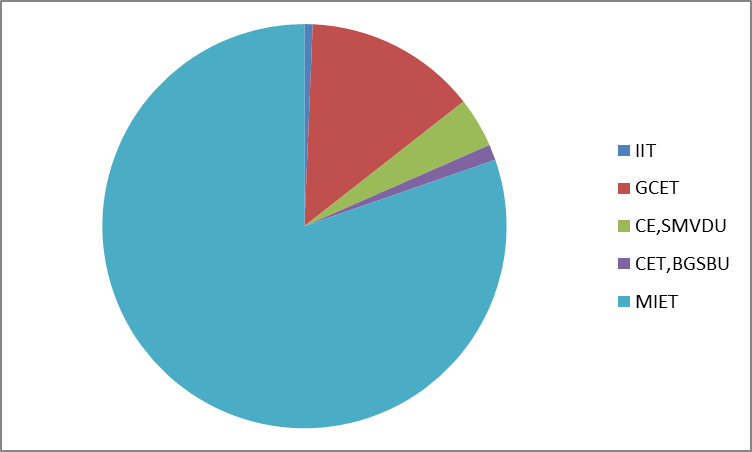
Figure-3: Showing pie chart of electronic collection available in engineering college libraries.
Users’ awareness level about library electronic collection
The respondents were asked about their awareness level towards electronic collection. The response of respondents is indicated in Table 4.
| Types of collection | Students (n=500) | Faculty members (n=65) | Response rate (%) |
| Electronic collection | |||
| e-books | 486 (97.2%) | 63(96.92%) | 549 (97.16%) |
| Online reference sources | 484 (96.8%) | 64 (98.46%) | 548 (96.99%) |
| e-journals/periodicals | 344 (68.8%) | 42 (64.61%) | 386 (68.31%) |
| CD-ROMs | 231 (46.2%) | 28 (43.07%) | 259 (45.84%) |
| e-Theses/dissertations | 289 (57.8%) | 39 (60%) | 328 (58.05%) |
| e-Newspapers | 356 (71.2%) | 44 (67.69%) | 400 (70.79%) |
| e-Encyclopaedias | 309 (61.8%) | 41 (63.07%) | 350 (61.94%) |
Table 4: Users’ awareness level about library electronic collection
Table 4 demonstrates that out of 565 respondents 549 (97.16%) of students and faculty members were aware about e-books, 548 (96.99%) of students and faculty members were aware about online reference sources, 386 (68.31%) of students and faculty members were aware about ejournals/periodicals, 259 (45.84%) of students and faculty members were aware about CDROMs, 328 (58.05%) of students and faculty members were aware about e-theses/dissertations, 400 (70.79%) of students and faculty members were aware about e-Newspapers, 350 (61.94%) of students and faculty members were aware about e-Encyclopaedias.
Satisfaction level of the users for electronic collection available in college/university library The respondents were asked about the satisfaction level of users towards electronic library collection and user’s satisfaction level about the electronic library collection satisfaction or dissatisfaction level of respondents towards the electronic collections provided by the library. Table 5 depicts the respondents’ satisfaction level with electronic library collections.
| Satisfaction level of the users towards electronic collection | Students (n=500) | Faculty members (n=65) | Response rate (%) |
| Highly satisfied | 214 (42.8%) | 25 (38.46%) | 239 (42.30%) |
| Satisfied | 121 (24.2%) | 16 (24.61%) | 137 (24.24%) |
| Moderately satisfied | 82 (16.4%) | 17 (26.15%) | 99 (17.52%) |
| Dissatisfied | 11 (2.2%) | 2 (3.07%) | 13 (2.30%) |
| Highly dissatisfied | 72 (14.4%) | 5 (7.69%) | 77 (13.62%) |
| Total | 500 | 65 | 565 (100%) |
Table 5: Satisfaction level of the users for electronic collection available in college/university library
Table 5 indicates that about 214 (42.8%) of the students were highly satisfied for the electronic collection available in college/university library whereas 121 (24.2%) were satisfied. 82 (16.4%) of the students said that they were moderately satisfied with the library electronic collection, 11 (2.2%) of the students were dissatisfied whereas 72 (14.4%) were highly dissatisfied. Further it is revealed that about 25 (38.46%) of the faculty members were highly satisfied for the electronic collection available in college/university library whereas 16 (24.61%) were satisfied. 17 (26.15%) of the faculty members said that they were moderately satisfied with the library electronic collection, 2 (3.07%) of the faculty members were dissatisfied whereas 5 (7.69%) were highly dissatisfied.
Frequency of the users for the use of electronic collection
The respondents were asked about their frequency regarding use of electronic collection. Their response is indicated in Table 6.
| Frequency | Students (n=500) | Faculty members (n=65) | Response rate (%) |
| All of the time | 220 (44%) | 30 (46.15%) | 250 (44.24%) |
| Most of the time | 204 (40.8%) | 26 (40%) | 230 (40.70%) |
| Some of the time | 73 (14.6%) | 8 (12.30%) | 81 (14.33%) |
| Never | 3 (0.60%) | 1 (1.53%) | 4 (0.70%) |
| Total | 500 | 65 | 565 (100%) |
Table 6: Frequency of the users for the use of electronic collection
Table 6 gives us an idea about the frequency of using electronic collection available in college/university library. In this table, 250 (44.24%) of the students and faculty members use electronic collection almost all of the time whereas 230 (40.70%) of the Students and Faculty Members used most of the time. About 81 (14.33%) of the students and faculty members used it some of the time while very less number of the 4 (0.70%) of the students and faculty members said that they never use electronic collection.
Overall satisfaction level of the users for the electronic collection and services The respondents were asked about their level of satisfaction toward electronic collection and services. The responses of respondents in this regards are presented in Table 7.
| Overall satisfaction level for electronic collection | Students (n=500) | Faculty members (n=65) | Response rate (%) |
| Highly satisfied | 146 (29.2%) | 22 (33.84%) | 168 (29.73%) |
| Satisfied | 256 (51.2%) | 27 (41.53%) | 283 (50.08%) |
| Neutral | 68 (13.6%) | 08 (12.30%) | 76 (13.45%) |
| Dissatisfied | 23 (4.6%) | 4 (6.15%) | ÃÂÂ 27 (4.77%) |
| No opinion | 7 (1.4%) | 4 (6.15%) | 11 (1.94%) |
| Total | 500 (100%) | 65 (100%) | 565 (100%) |
Table 7: Overall satisfaction level of the users for the electronic collection and services
It is indicated that 168 (29.73%) of the students and faculty members were highly satisfied for the use of electronic collection and services whereas 283 (50.08%) of the students and faculty members were satisfied. Whereas response of 76 (13.45%) of the students and faculty members was neutral while 27 (4.77%) of the students and faculty members were dissatisfied. Very less number of 11 (1.94%) of the students and faculty members said that they have no opinion about the use of electronic collection and services.
Conclusion
The libraries are going through lots of challenges due to the awesome effect of IT. The customers these days aren't completely depending on libraries but they're getting the required information from the internet as properly. customers have end up extra technology savvy because of the expanded on line surroundings. Accessibility to the specified records at a fast charge as well as brief response to the query is the expectancies of users. The end result of the have a look at indicates that a proper steering is wanted for the customers in order to help them to store the time and to get the proper data. nearly all Engineering college is having properly resources within the library both print and digital layout, however because of loss of right know-how many of the users they're now not the use of these assets. The college/university government have to take important steps to enhance the library offerings and additionally offer right guidance to the users.
Findings
• As depicted from Table 2 and Figure 2, the oldest engineering college is GCET, Jammu and IIT, Jammu is established recently.
• It was observed that maximum number of the electronic-collection is in MIET, Jammu i.e., 1198368, while minimum number 9722 e-collection is in IIT, Jammu as indicated in Table 3.
• Majority i.e., 549 (97.16%) of respondents aware about with e-books as indicated in Table 4.
• Maximum numbers of 239 (42.30%) respondents were highly satisfied while minimum number 13 (2.30%) respondents were dissatisfied as indicated in Table 5. • About 250 (44.24%) of respondents use the e-collection all the time whereas 14 (2.8%) respondents have no opinion as indicated in Table 6.
Recommendations
Based on the findings of the study, the following recommendations are suggested:
• Library professional of each engineering college library have to create more awareness on E-resources among the users.
• Library has to take steps to arrange various training and orientation programmes for students and faculty members to use the available of electronic–resources in the library
• Speed of internet connection needs to be increased for quick access to available Eresources.
References
- Vinoda, B., Pitla, Raja, S. K., and Doraswamy, N. “Utilization of library information sources and services in the engineering colleges: A case study.” Libr Philos Pract (2021):5778.
- Bharathi, K., and Sujatha, H.R. “Utilization of the digital information resources and services provided in the Engineering college libraries in Karnataka, India: User’s perspective.” Libr Philos Pract (2019): 2580.
- Dhanalakshmi, B., and Nalhe, U. P. “Use and impact of library services on users: A case study of Aurora engineering college, Bhongir.” Int J Speech Lang Pathol 7.2 (2017): 115-123.
- Sun, Y., Wong, A. K., and Kamel, M. S. “Classification of imbalanced data: A review.” Int J Pattern Recognit Artif Intell 23.4 (2009): 687-719.
- Farooqui, Asmataj, Hadagali, and Gururaj, S. “Use of library services by the post-graduate students of management colleges affiliated to Karnatak University, Dharwad.” J Indian Libr Assoc 57.3 (2021): 72-83.
- Firdaus, Shamama, and Sudharma. “Awareness and Use of Web Resources among the Post Graduate Engineering Students of ZHCET, Aligarh Muslim University, Aligarh.” Int Res J Libr Inf Sci 5.2 (2015): 200-215.
- Kumar, G. K.” Use of information resources and services available in the library by the postgraduate students and research scholars of university of agricultural sciences, Dharwad: A study.” Int J Digit Libr Serv 7.3 (2017): 1-2.
- Kumar, H. S., Vanithashree, M. R., and Mahesha, G. E. “Utilization of E-resources by the faculty members with special reference to University Visvesvaraya College of Engineering (UVCE), Bangalore-A case study.” Int J Digit Libr Serv 7.4 (2017): 73-78.
- Mushtaq, M., and Tausif, A. “Collection management of electronic resources in engineering college libraries of Aligarh, India: A study.” Collect Curation 39.3 (2020): 89-96.
- Oak, M. “Assessing the library user’s expectations: A select study of management institutions in Savitribai Phule Pune University (SPPU), Pune, India.” Int J Lib Inf Sci 5.3 (2016), 149-158.
- Parashar, Vijay, and Babel. “The use and impacts of electronic resources in engineering education institutions.” Webology 19.2 (2022): 2529-2538.
- Puttaswamy, R. M., and Krishnamurthy, M. “Use of e-resources for teaching and research by the faculty members of various engineering colleges of VTU, Karnataka: A study.” Int J Libr Inf Stud 4.1 (2014): 52-60.
- Rathour, Priti Rani, and Madan Singh. “Information need and information seeking behaviour of faculty in engineering colleges of Haryana: Implication of library resources and services.” Prof J Libr Inf Technol 5.2 (2015): 128-137.
- Reddy, K., Kumaraswamy, and Aruna, P. “Satisfaction of users on library collection and services in engineering college libraries of Hyderabad and Rangareddy districts, Telangana.” Prof J Libr Inf Technol 4.2 (2014): 142-160.